
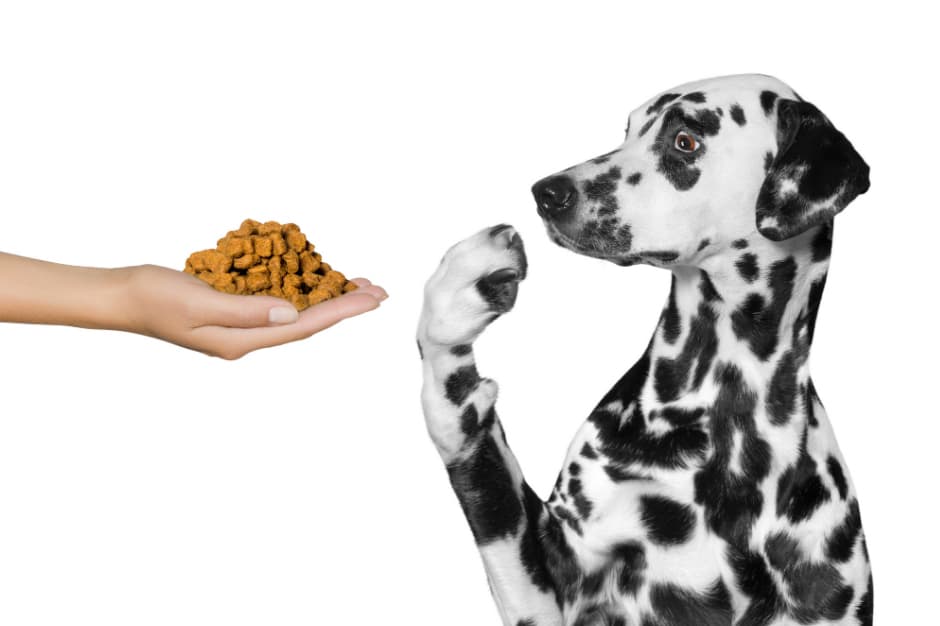
I get asked this question all the time: “I try to use treats to distract my reactive dog, but it’s not working! Why?” Owners often say they’ve tried to get their dog to sit and focus on them while a trigger passes, but their dog continues to lunge, bark, or refuse the food. They’re frustrated and confused, especially when their dog normally loves food.
Understanding Your Reactive Dog’s Stress Response
The reason your dog is still reacting or refusing food is that the trigger is too close, and your dog is feeling overwhelmed. They’ve entered nature’s survival mode: fight, flight, freeze, or fidget.
The Role of Adrenaline and Cortisol
When your dog perceives a threat, their adrenaline and cortisol (stress hormone) levels rise rapidly. At this point, survival instincts take over, and your dog doesn’t need food to survive.
Prioritising Survival Over Treats
Instead, their energy is focused on either escaping the situation or using behaviours like barking or lunging, which may have been effective in creating distance from the perceived threat in the past.
A Human Analogy
To put this in human terms, imagine you’re walking down the road and suddenly see something you’re terrified of, like a snake. Your first response wouldn’t be to eat your favorite snack. You’d likely turn around and run the other way or try to create as much distance as possible from the trigger (snake). Even if someone offered you your favorite food to stay near the snake or walk closer, your natural response would be to ignore it; all you want to do is escape to safety. In that moment, your favorite food has no value.
How to Effectively Help Your Reactive Dog
To help your dog, it’s crucial to prioritize their sense of safety.
1. Create Distance from Triggers
Stay at a distance from the trigger where your dog can remain calm and feel safe. This distance will vary greatly between dogs; for some, it might be over 100 meters.
2. Avoid Pushing Past Triggers
Never walk towards or past the trigger, as this will push your dog further into a reactive state due to their stress response.
3. What to Do After a Reactive Episode
If your dog has already reacted (barking, lunging, etc.), take them straight home. After a reactive episode, dogs are often more sensitive to even the smallest triggers they may encounter.
Conclusion
Understanding your dog’s stress response and how it affects their behavior is crucial for effective reactivity training. Remember to prioritize distance, create a safe environment, and use positive reinforcement techniques at a pace your dog can handle.
Recent Comments